


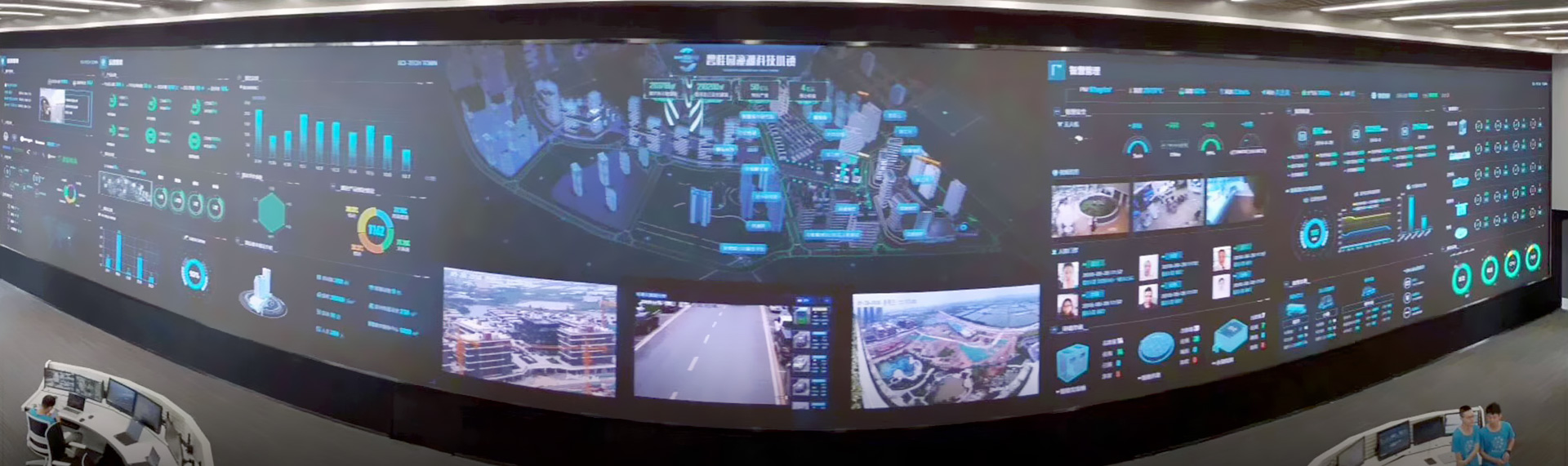
In the command and control hall of the Jiuquan Satellite Launch Center, a 56-square-meter LED main screen has been operating continuously for 731 days. Having weathered the Gobi Desert's scorching temperatures of 70°C and freezing temperatures of -40°C, and even the shockwaves of rocket launch, it maintains a pixel failure rate of 0.001%—a stability comparable to that of a spacecraft, honed through rigorous military-grade environmental adaptability testing.The ultimate challenge begins with rigorous nine-square grid testing. A Shenzhen-based specialty display company custom-made LED screens for military projects, requiring them to pass a testing matrix 10 times more stringent than national standards:During this process, the power module of a shipborne command screen experienced 217 sudden temperature changes, while maintaining a solder joint loss rate of 0.001mm²/hour, far exceeding the 0.1mm² standard for civilian screens.The core fortress is built on aerospace-grade component screeni
In the control hall of the Beijing Capital International Airport's tower, the moment a controller's fingertips swipe across the electronic progress sheet, the LED flight status screen 200 meters away, along the runway, flashes red in unison. This command transmission, spanning a crucial 300-millisecond life-or-death situation, has now been compressed to 43 microseconds—5,000 times faster than a human blink. The reason behind this is the transmission revolution ushered in by the Time-Sensitive Networking (TSN) protocol.The hardware breakthrough begins with the foundation of optical communications. The LED control screen deployed in a smart transportation center in the Xiongan New Area uses Huawei's OptiXtrans E6600 optical transmission equipment, directly connected to the signal source via single-mode optical fiber. Compared to traditional copper cables, optical fiber reduces signal attenuation from 100 dB/km to 0.2 dB/km, boosting transmission speeds to 100 Gbps. More crucially, the in
In 2025, a sudden power outage occurred in the control tower of an international airport, instantly blacking out 16 command and dispatch LED screens. Just 0.4 seconds after the flight takeoff and landing data disappeared, the backup power supply automatically took over, and the surveillance footage was instantly restored. This thrilling 8-millisecond switchover was a result of the dual power hot standby system's remarkable performance.The core defense is built on a multi-redundant architecture. The LED display system in a modern command center must meet the Class A standard of GB 50174-2017, "Data Center Design Specifications":Dual mains power access: 10kV independent lines from different substationsIntelligent switching device: ATS automatic transfer switch ensures a switching time of ≤200msThree-level power backup: diesel generator set + modular UPS + battery packTake the Shenzhen Metro Dispatching Center as an example. The 86-inch LED video wall in the control hall uses a 2N power s
The skyscrapers of the Shenzhen Bay Super Headquarters Base transform into a vast canvas at night, their 3,000-square-meter LED curtain wall awash with dynamic light and shadows reminiscent of a galaxy. Meanwhile, three kilometers away in the Mangrove Nature Reserve, bird monitors indicate a 15% year-on-year increase in the number of migratory birds roosting at night. Behind these seemingly contradictory statistics lies a technological revolution in light pollution control.Intelligent dimming systems are becoming a key breakthrough. The 632-meter facade of the Shanghai Tower utilizes environmentally sensitive adaptive technology: over 200 light sensors positioned around the building collect real-time ambient brightness data. The central processing unit dynamically adjusts the brightness output of the LED screens based on the astronomical clock and meteorological data. When the ambient illuminance falls below 10 lux, the screen brightness automatically drops to 30% of the baseline value
On the 2021 CCTV Spring Festival Gala stage, a new media backdrop comprised of 154 LED screens flashed synchronously, presenting live, live comments from "cloud audiences" thousands of miles away. As the singers interacted with the rolling stream of blessings, this bridge woven by code and optoelectronics completely redefined the boundaries of interactive performance.The core technology driving this interaction is a real-time channel built on the WebSocket full-duplex communication protocol. It flows like a never-ending stream of data: user comments are validated by the front-end and then streamed to the server. The back-end system filters sensitive words and normalizes the word count in milliseconds before distributing the data to various display nodes via a distributed architecture. To ensure that the massive volume of comments does not clutter the screen, the system employs a timeline sorting algorithm combined with dynamic transparency adjustment technology, allowing the text to fl
At theme parks, visitors often face long queues, which can lead to anxiety. While some parks have tried using LED screens to play animations to alleviate this, the monotonous content fails to truly distract visitors. The combination of a floor tile game development kit and LED technology offers an innovative solution to this problem.Traditional LED screens in queue areas are typically mounted high up, often featuring looping advertisements or animations, leaving visitors passively watching rather than engaging. The floor tile game development kit embeds LED screens into the ground, leveraging their high brightness and durability to create interactive floor game environments. When visitors enter the queue area, the LED floor tiles beneath their feet trigger different game modes based on pre-programmed settings, such as stepping on grids to score points or avoiding virtual obstacles. Visitors can interact with the game content in real time through actions like stepping and jumping, provi
In the face of the digital age, traditional museums' static exhibits are often criticized as "monotonous and boring." Even though some venues have introduced LED displays to enhance displays, their limited information presentation makes it difficult to break away from the rigid "exhibit + text description" model. The integration of transparent screens with layered explanations and LED technology is opening up new possibilities for museums to create immersive exhibition experiences.In traditional display cases, artifacts and LED displays are often disconnected: LED displays often serve as background panels to display an introduction to the exhibits, or stand alone as information boards next to the display cases. This forces viewers to frequently switch between the actual objects and the screen, creating a fragmented experience. The emergence of transparent LED displays overcomes this limitation. Their high light transmittance allows them to blend seamlessly into the display cases like "
Under the sweeping wave of digitalization, many scenic spots have introduced LED screens as intelligent guide tools to enhance the visitor experience. However, in reality, some scenic spot LED screens are left unused, failing to fully realize their potential value.Traditional scenic spot guide signs are mostly static displays with delayed information updates, making them unable to meet the increasingly diverse needs of visitors. While LED screens offer many advantages, such as dynamic display and large amounts of information, they can easily become mere decorations without effective content management and interactive mechanisms. For example, some scenic spot LED screens are used solely to play looping promotional videos, failing to provide real-time information that visitors care about, such as attraction openings, route navigation, and crowd levels. This leads to low visitor engagement and ultimately unused screens.To address this situation, integrating AR navigation screens with mini
While traditional paper price tags and static shelf advertising have update cycles of 3-7 days, the electronic price tag linkage system is leveraging data exchange to create a real-time, resonant marketing matrix between LED displays and shelf advertising. After implementing this system, a supermarket chain saw a 41% increase in shelf traffic for promotional items and a 20-fold improvement in price tag update efficiency.System Architecture and Linkage LogicHardware Interconnection Foundation: Using a Bluetooth 5.0 + 2.4G dual-mode communication module, electronic price tags and store LED displays are connected to a unified gateway. A 2.4G private network deployed in a convenience store enables millisecond-level data synchronization between 300 price tags and three LED displays within a 50-meter radius, ensuring zero-delay synchronization between price tag adjustments and on-screen promotional information. Data-triggered mechanism: When electronic price tags detect price changes (such a












 CN
CN

 Home >


